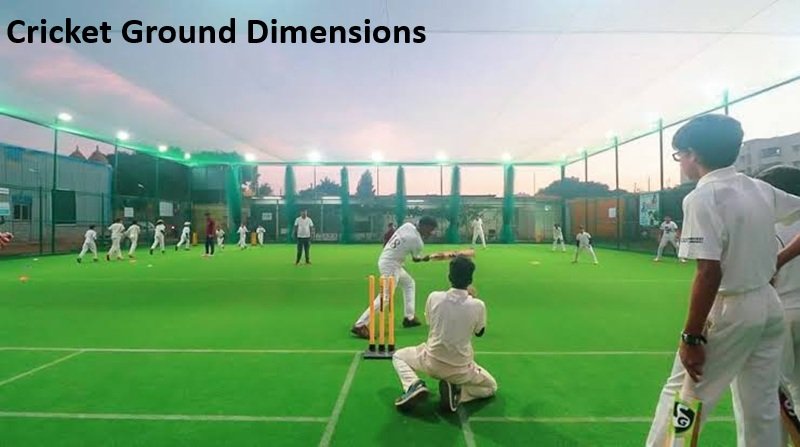

Introduction: Cricket Ground Dimensions
Cricket is one of the global’s most famous sports activities, and each in shape is based upon a well designed playing place. While many people recognize the game enthusiasts and the pitch, the cricket ground dimensions moreover play a number one position in figuring out how the game unfolds. The length of the boundary, the length of the pitch, the placement of fielding circles, and the overall format all influence batting, bowling, and fielding techniques.
Unlike soccer or basketball, cricket does no longer require every stadium to have identical dimensions. Grounds around the area vary in form and length, but they need to meet the recommendations of the International Cricket Council (ICC). Understanding cricket ground dimensions lets gamers, coaches, umpires, and lovers respect the technical factors of the sport.
In this comprehensive manual, we are able to offer a reason for cricket floor measurements, boundary sizes, pitch dimensions, subject markings, ICC guidelines, and masses extra.
What Are Cricket Ground Dimensions?
Cricket ground dimensions test with the measurements of the gambling location used for cricket suits. These consist of:
- Overall ground duration
- Cricket pitch duration
- Pitch width
- Boundary distance
- Inner issue circle
- Protected vicinity
- Fielding rules
Unlike many sports activities, cricket grounds are generally oval in desire to square. Therefore, no single constant floor length exists. However, the playing region wants to conform with ICC regulations.
Standard Cricket Ground Dimensions Table
| Cricket Ground Component | Standard Measurement |
|---|---|
| Pitch Length | 22 yards (20.12 meters) |
| Pitch Width | 10 feet (3.05 meters) |
| Bowling Crease | 8 feet 8 inches (2.64 meters) |
| Popping Crease | 4 feet (1.22 meters) in front of bowling crease |
| Return Crease | 4 feet 4 inches (1.32 meters) from middle stump |
| Minimum Boundary | 59.43 meters (65 yards) |
| Preferred Boundary | 64–82 meters |
| Maximum Boundary | Around 82 meters (90 yards) |
| Inner Circle Radius | 27.43 meters (30 yards) |
ICC Rules for Cricket Ground Dimensions
The International Cricket Council (ICC) offers tips for worldwide cricket grounds.
Some key ICC tips embody:
- The shortest boundary need not be less than 59.43 meters (65 yards).
- The longest boundary usually does not exceed 82.29 meters (90 yards).
- Boundaries need to be as equal as possible on both sides.
- The pitch ought to be centrally placed.
- Safety zones outside the boundary want to be maintained.
Grounds website hosting ICC tournaments go through inspections earlier than approval.
Cricket Pitch Dimensions
The cricket pitch is the applicable strip wherein batting and bowling take location.
Pitch Length
The pitch measures:
22 yards (20.12 meters)
This dimension has remained unchanged due to the reality of cricket’s early information.
Pitch Width
The elegant width is:
10 feet (3.05 meters)
The pitch floor is carefully organized to provide regular jumps.
Important Pitch Markings
Several vital traces are marked on the pitch.
Bowling Crease
- Length: 8 feet 8 inches
- Used to determine prison deliveries.
Popping Crease
- Located 4 feet inside the front of the bowling crease.
- Determines whether or not the batter is correctly within the crease.
Return Crease
- Runs perpendicular to the bowling crease.
- Ensures the bowler presents inner criminal limits.
Cricket Boundary Dimensions
The boundary separates the gambling vicinity from the spectator place.
Boundary distances range relying on the stadium.
Typical measurements encompass:
| Boundary Type | Approximate Distance |
|---|---|
| Minimum ICC Boundary | 59.43 m |
| Medium Boundary | 65–70 m |
| Large Boundary | 75–82 m |
Larger boundaries commonly select bowlers, at the same time as shorter obstacles benefit aggressive batters.
Inner Circle Dimensions
Limited-overs cricket uses a fielding circle.
Its radius measures:
27.43 meters (30 yards)
The fielding circle allows enforce powerplay regulations in One Day Internationals and T20 cricket.
Powerplay Field Restrictions
During powerplays:
- Only a confined quantity of fielders are allowed outside the 30-outdoor circle.
- Encourages attacking cricket.
- Creates more scoring opportunities.
The circle marks the use of white paint spherically on the sphere.
Cricket Ground Layout
A extremely-modern-day cricket ground includes:
- Central pitch
- Wicket at each ends
- Bowling crease
- Popping crease
- Return crease
- Inner place circle
- Boundary rope
- Practice location
- Player pavilion
- Sight presentations
Everything contributes to smooth healthful operations.
Why Cricket Grounds Have Different Sizes
Unlike football stadiums, cricket grounds regularly have specific shapes.
Reasons embody:
Historical Construction
Many famous stadiums have been built a long time within the past whilst standardization has become much less crucial.
Available Land
Urban stadiums often have restrained space.
Multi-Sport Venues
Some stadiums host football, live shows, or athletics alongside cricket.
Natural Landscape
Existing terrain influences stadium layout.
Largest Cricket Grounds
Several stadiums are well-known for his or her giant barriers.
Examples encompass:
| Stadium | Country | Approximate Boundary Size |
|---|---|---|
| Narendra Modi Stadium | India | 70–80 m |
| Melbourne Cricket Ground | Australia | Up to 85 m |
| Eden Gardens | India | 66–75 m |
| Lord’s Cricket Ground | England | 65–76 m |
| The Oval | England | Around 70 m |
These dimensions range slightly counting on the in shape setup.
Smallest International Cricket Grounds
Some venues have particularly shorter obstacles.
Examples consist of:
- Sharjah Cricket Stadium
- Eden Park
- Trent Bridge (positive factors)
- Hagley Oval
Short obstacles typically produce excessive-scoring fits.
Effect of Ground Dimensions on Cricket
Ground duration drastically influences gameplay.
Batting
Smaller grounds:
- More sixes
- Higher strike fees
- Easier boundary scoring
Large grounds:
- More walking amongst wickets
- Greater emphasis on placement
Bowling
Fast bowlers advantage from:
- Longer rectangular boundaries
- Better catching opportunities
Spinners enjoy:
- Larger grounds that lessen smooth sixes
Fielding
Large grounds require:
- Greater athleticism
- Faster boundary riders
- Better throwing accuracy
Types of Cricket Grounds
International Grounds
Meet ICC requirements and host Test, ODI, and T20I suits.
Domestic Grounds
Used for countrywide competitions.
Club Grounds
Smaller facilities designed for amateur cricket.
School Grounds
Primarily used for kids’ improvement and schooling.
Factors Considered While Designing a Cricket Ground
Ground architects recall:
- Drainage
- Soil tremendous
- Grass kind
- Spectator visibility
- Player safety
- Floodlights
- Pavilion placement
- Practice centers
- Boundary consistency
Modern stadiums are designed using advanced engineering strategies.
Interesting Facts About Cricket Ground Dimensions
- The cricket pitch has remained 22 yards lengthy for masses of years.
- Every international stadium has barely any wonderful boundary dimensions.
- Oval-formed grounds are the most unusual.
- Some grounds have one aspect a whole lot shorter than the alternative.
- Boundary ropes may be moved inward for sure tournaments.
- Larger grounds usually produce greater catches close to the boundary.
Importance of Accurate Cricket Ground Measurements
Proper measurements make certain:
- Fair opposition
- Player protection
- ICC compliance
- Better umpiring options
- Consistent playing situations
- Professional wholesome organization
Ground personnel regularly investigate markings earlier than each fit.
Conclusion
Cricket floor dimensions play a critical feature in each layout of the game. While the 22-backyard pitch remains steady across all tiers of cricket, the general floor length and boundary lengths vary from one stadium to every specific. ICC pointers make sure that worldwide venues maintain strong and competitive playing situations at the same time as permitting a few flexibility in ground layout.
Understanding cricket ground dimensions facilitates gamers to increase techniques, assists coaches in planning techniques, and permits fanatics to higher recognize how stadium duration impacts in form consequences. Whether it’s a Test match at a historical venue or an excessive-scoring T20 game in a contemporary stadium, the dimensions of the cricket floor stay one of the key elements shaping the competition.
Frequently Asked Questions (FAQs)
What is the standard length of a cricket pitch?
The expert cricket pitch measures 22 yards (20.12 meters) from wicket to wicket.
What is the minimum ICC boundary size?
According to ICC suggestions, the minimum boundary need to commonly be 59.43 meters (65 yards) from the center of the pitch.
Are all cricket grounds the identical length?
No. Cricket grounds vary in shape and length, however international venues want to conform with ICC pointers for minimum and preferred boundary distances.
What is the radius of the 30-outside circle?
The internal fielding circle has a radius of 27.43 meters (30 yards).
Why do cricket grounds have unique boundary lengths?
Grounds range because of land, historic stadium designs, and community infrastructure. ICC pointers allow some flexibility on the identical time as maintaining equity.
Which part of a cricket ground has fixed dimensions?
The cricket pitch has steady dimensions, which includes a period of 22 yards (20.12 meters) and a width of 10 feet (3.05 meters). Other elements of the ground, collectively with boundary lengths, can vary.
How do huge cricket grounds have an effect on suits?
Larger grounds make it tougher to hit sixes, reward suitable fielding, inspire going for walks most of the wickets, and regularly offer bowlers with more gain.